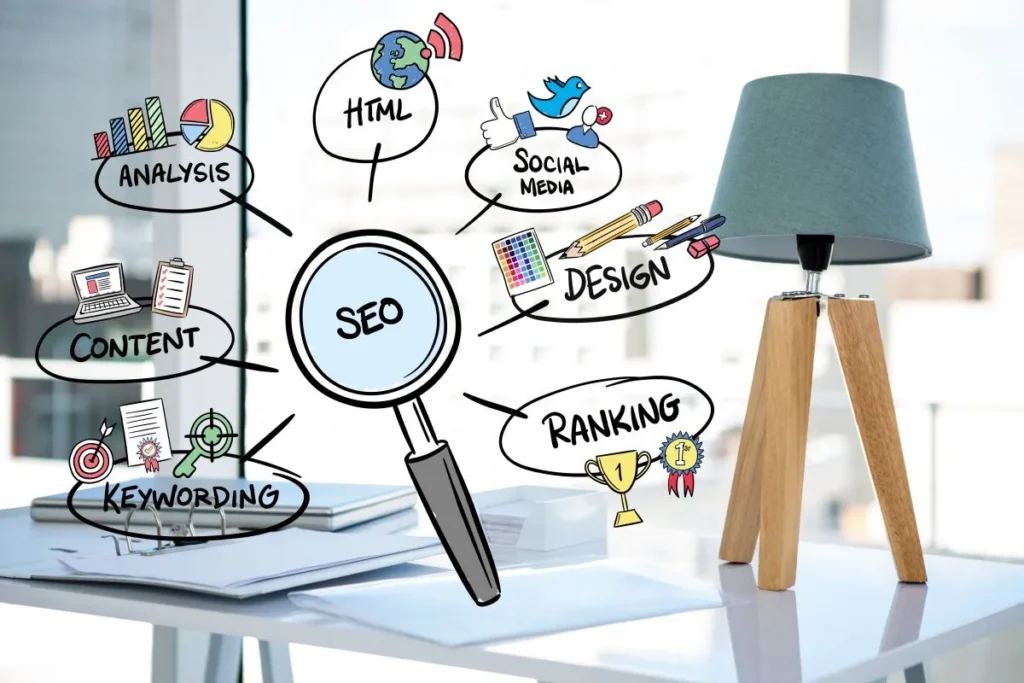
Search Engine Optimization (SEO) has come a long way. Traditional SEO techniques prioritized keyword placement to improve rankings. However, modern search engines prioritize search intent and context over keywords.
Semantic SEO is a response to this shift in how search engines operate. The goal is to create content that communicates context, meaning, and relevance. It’s not about targeting words but about providing the complete information users want.
This blog explains what semantic SEO is, its elements, how it works, and how it differs from conventional SEO.
Semantic SEO – What It Is, Evolution, and Significance
Semantic SEO is an SEO strategy that focuses on user intent and provides quality, relevant, and valuable content. It considers context and semantic relationships to improve SEO and provide more relevant, useful content.
Significance of Semantic SEO
Semantic SEO is critical as it reflects how search engines work. It has several benefits, such as:
- Better content ranking for related keywords.
- Improved content quality and audience engagement.
- Improved topical authority.
- Higher possibility of appearing in search results and featured snippets.
These factors enhance future organic search performance.

From Keywords to Semantics: The Evolution of SEO
SEO has come a long way; initially, the search engines relied primarily on keywords. This practice resulted in keyword stuffing and a degraded content quality. This changed with the Google Hummingbird search algorithm, which allowed search engines to interpret search intent.
Then came Google RankBrain and Google BERT to better understand natural language. These advancements have significantly influenced modern SEO strategies, which focus on content that matches intent and topics.
Semantic SEO – Key Components
The key components of semantic SEO are search intent, entities, topic clusters, and schema. These components guarantee quality of content, ranking on Google, and user engagement:
| Component | Purpose | SEO Impact | Example |
| Entity-Based Optimization | Assists with contextual knowledge and topical relationships. | Builds topic authority and visibility in the knowledge graph. | Referencing related entities such as brands, tools, or topics. |
| Search Intent Optimization | Matches content to the user’s intent, such as informational, transactional, or navigational. | Improves relevance and lowers bounce rate. | Creating a how-to guide for informational search. |
| Topic Clusters | Organizes content into pillars and supporting pages. | Improves internal linking and site structure. | A main SEO Guide linking to subtopics. |
| Schema Markup | Provides structured data. | Rich snippets, such as featured snippets and FAQs. | Implementing an FAQ schema in a blog post. |
How Semantic SEO Works
Semantic SEO is a type of content organization that shows connections between concepts and words, allowing search engines to determine not just which words are used, but also the content’s intent and topic. It is based on the significance of the context, meaning, and topic relevance (not words) to enhance understanding and search.
Search Intent Analysis
Users have goals when they search. They might be looking for information, a product or service, or a particular website. Semantic SEO is about recognizing this intent and catering to it. If the content is relevant to the user’s search, it’s likely to satisfy their query, which will help the page rank well.
Contextual Understanding
Contemporary search engines consider not only the keywords but also the search terms. They consider the whole search phrase to understand context. This is important because words are polysemous (they have multiple meanings), and the search phrase indicates intent. If the web page contains the appropriate keywords and phrases, the search engine will understand the context.
Entity Recognition
An entity is a discrete object, such as a person, company, location, or product. Search engines identify entities to connect and understand information. Leveraging entities in content helps make it clearer and more meaningful to search engines, which can link it to an existing body of information, increasing its authority and aiding classification.
Comprehensive Topic Coverage
Semantic SEO is not about keywords but topic coverage. When articles cover multiple subtopics, answer numerous questions, and provide valuable content, they are considered expert sources. This increases the likelihood of ranking for a range of related searches and for providing value to users.
Semantic vs. Traditional SEO
The differences between traditional SEO and semantic SEO are obvious. Classic SEO is about keywords and on-page optimization. Semantic SEO is the optimization of quality, meaning, and intent. The move signaled the shift to quality search results.
| Parameter | Traditional SEO | Semantic SEO |
| Focus | Exact-match keywords | Topics, intent, and meaning |
| Content depth | Short pages targeting one keyword | Comprehensive coverage of a topic |
| Optimization signal | Keyword frequency and density | Entities, relationships, and context |
| Success metric | Rank for one keyword | Rank for hundreds of related queries |
| User experience | Secondary concern | Central to the strategy |
Best Practices and Common Mistakes of Semantic SEO
There are some best practices for successful semantic SEO:
- Content should be comprehensive, structured, and address the searcher’s intent.
- Content must be written in natural language.
- Headings, structure, and internal links improve user experience and semantics.
Semantic SEO has some potential pitfalls:
- Overemphasis on keywords often results in unnatural content. Ignoring search intent reduces relevance, even when the content is well-written.
- Not covering the topic fully is another common mistake, as it causes content to miss out on search opportunities.
How to Optimize Content Semantically
To ensure semantic optimization:
- First, determine the main topic and user intent.
- Then conduct topic-based keyword and query research.
- Develop a content brief and include related concepts.
- Finally, ensure optimal content structure, readability, and clarity.
This method supports both content quality and search performance.
Real-World Example of Semantic SEO
A comprehensive article on “digital marketing fundamentals” may rank for multiple queries, including:
- Digital marketing basics.
- Online marketing strategies.
- Importance of digital marketing.
This is because it is more informative and includes the keyword.
Conclusion
Semantic SEO is about content creation and optimization. It’s not about keywords; it’s about quality, relevant, and contextual content. When you focus on intent, relations, and coverage, the content becomes more relevant and valuable to search engines and users. This results in higher rankings, user engagement, and success. Semantic SEO will be more important in the future. Conversational search has grown with the advent of voice search and AI. This has emphasized the importance of semantics.