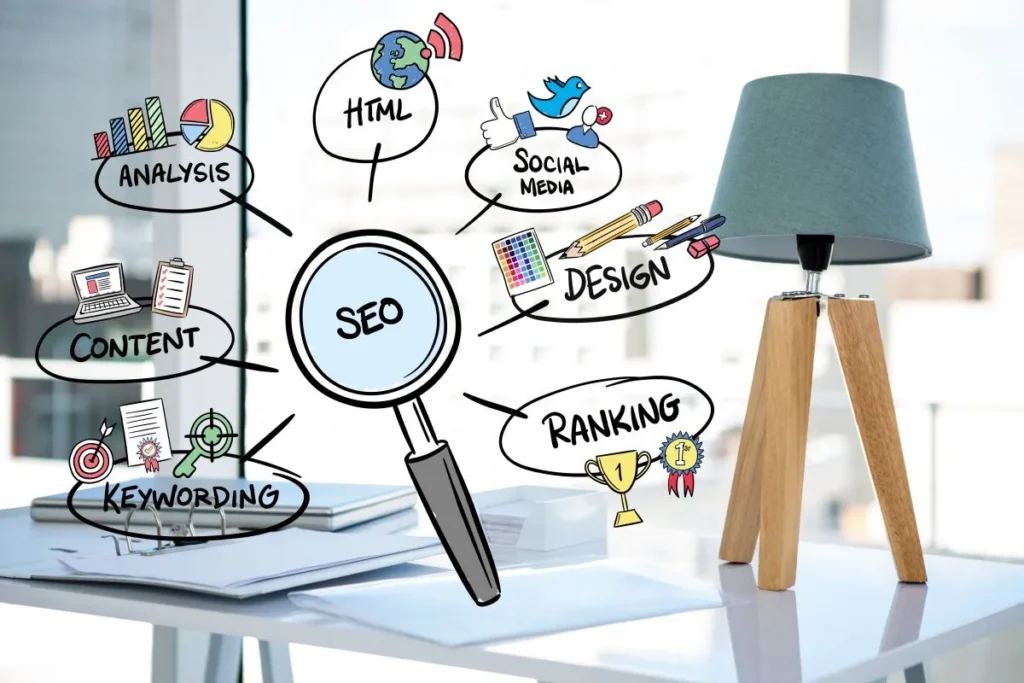
A prospect no longer needs ten tabs to compare vendors. They can ask ChatGPT for options and narrow the list with a follow-up question. Then they may visit only the sources that seem useful. A brand may be part of that answer, cited below it, or missing from the conversation.
This has made “how to rank in ChatGPT” a common marketing question. The wording is familiar, but the result is different from a normal search page. There is no fixed first position that every user sees. ChatGPT builds an answer around the prompt, available sources, and context. The practical goal is to make your brand easy to discover, understand, verify, and cite.
What Does Ranking in ChatGPT Mean?
ChatGPT can search the web for current information and link to relevant sources. AI search visibility can take several forms: a brand mention in the answer, a linked citation, a product card, or a visit from the sources panel.
That visibility is not guaranteed. OpenAI does not publish a standard ranking formula for general ChatGPT answers. Results can also change when the prompt, location, date, or follow-up question changes. ChatGPT SEO should therefore be treated as a visibility program, not a promise of one permanent rank.
Terms such as LLM SEO, Generative Engine Optimization (GEO), Answer Engine Optimization (AEO), and ChatGPT optimization often describe overlapping work. Each focuses on making content usable in AI-led discovery. Strong technical SEO and useful content remain the base.
12 Ways to Improve Your Brand’s AI Visibility
1. Protect the SEO Foundation
A page must be available before it can become a source. Check crawl access, status codes, canonical tags, internal links, mobile use, and page speed. Keep important information in readable page text. Do not hide it in an image or script that may fail to load. Proteus Technologies’ SEO services cover the audits and on-page work that support this foundation.
2. Allow OAI-SearchBot
Review robots.txt, firewall rules, and bot protection. OpenAI states that OAI-SearchBot is used to surface websites in ChatGPT search. A site that opts out will not be shown in search answers, although a navigational link may still appear in some cases. Allow the official user agent and published IP ranges where business policy permits.
3. Separate Search Access From AI Training
OAI-SearchBot and GPTBot have different roles. A company can allow the search crawler while blocking GPTBot if it does not want its pages used to train foundation models. OpenAI treats these controls independently. This distinction helps teams avoid blocking every OpenAI crawler by default.
4. Write for Real Customer Questions
Collect questions from sales calls, support tickets, site search, and keyword research. Use them to shape pages around real decisions. If the heading asks what a service costs, give a direct response before adding conditions. Clear question-and-answer passages support AEO and make the page easier for people to scan.
5. Build Topical Authority
One broad article rarely proves depth. Create a main guide. Then support it with focused pages on use cases, costs, problems, comparisons, and setup. Link the pages in a logical way. Proteus’ guide to semantic SEO in 2026 explains why intent, entities, and full topic coverage matter more than repeating one keyword.
6. Add First-Hand Evidence
Generic summaries are easy to copy and hard to distinguish. Add results from real projects, original research, product tests, expert comments, or screenshots. You can also explain a method your team uses. Name the person who created or reviewed the page. Google’s people-first content guidance uses E-E-A-T as a quality lens. OpenAI has not named E-E-A-T as a ChatGPT ranking factor, but clear experience and authorship help readers judge a source.
7. Keep Brand Facts Consistent
Use the same business name, product names, service descriptions, address, and leadership details across the website and major profiles. Maintain a useful About page. Add clear author pages as well. Consistent facts reduce ambiguity when a system tries to connect a brand with a topic, person, location, or product.
8. Earn Relevant Brand Mentions
AI visibility does not live on your site alone. Seek accurate coverage from trade publications, associations, partners, directories, podcasts, and expert roundups that fit the market. A relevant brand mention is more useful than a large batch of weak placements. Digital PR should create proof that another source can confirm, not repeat the same sales copy across many sites.
9. Make Answers Easy to Quote
Open a section with a plain definition or conclusion, then provide detail and evidence. Use descriptive headings, short paragraphs, comparison tables, and ordered steps when they fit. This is AI search optimization at the page level: the answer can stand on its own, while the surrounding text explains limits and context.
10. Use Structured Data Carefully
Add valid structured data for the content that is actually on the page, such as Organization, Article, Product, or LocalBusiness markup. Google recommends JSON-LD for supported search features. Schema markup can improve machine-readable context, but OpenAI does not promise that it will create ChatGPT rankings or AI citations. Treat it as support, not a shortcut.
11. Keep Important Pages Current
Old prices, staff details, product limits, and dates weaken trust. Review pages that contain fast-changing facts and show a clear update date when it helps the reader. Replace broken sources and remove claims that no longer hold. Proteus’ article on deep content in the AI era also stresses research, useful depth, and regular updates.
12. Feed Product Data and Measure Results
Retailers should keep product titles, images, prices, and availability accurate. OpenAI’s product feed documentation provides a direct route for eligible merchants to share structured catalog data with ChatGPT. Service businesses can focus on clear offer pages instead.
Measure progress with a fixed set of customer-style prompts, brand mentions, AI citations, and qualified visits. OpenAI’s publisher guidance says ChatGPT adds utm_source=chatgpt.com to referral URLs, making that traffic easier to track. Record the prompt, date, answer, cited source, landing page, and resulting lead. Look for patterns over time rather than reacting to one test.
What to Avoid in ChatGPT Optimization
Do not create hundreds of thin question pages, copy competitors, or add schema markup for content users cannot see. Avoid claims that a certain word count or keyword density guarantees inclusion. No public evidence supports those shortcuts.
The same warning applies to prompt testing. Repeating one question until the brand appears does not prove broad AI search visibility. Test different wording and buyer stages, then connect mentions and visits to business results.
Conclusion
Learning how to rank in ChatGPT starts with a simple fact: there is no permanent rank to win. A brand earns more chances to appear when its pages are crawlable, its answers are clear, and its claims can be checked across reliable sources.
Start with technical access and strong SEO. Add direct answers, first-hand evidence, consistent brand facts, structured data, and useful third-party mentions. Then measure citations and referral visits against the questions customers actually ask. In 2026, that steady work is a stronger ChatGPT optimization plan than chasing a secret prompt or a new name for keyword stuffing.